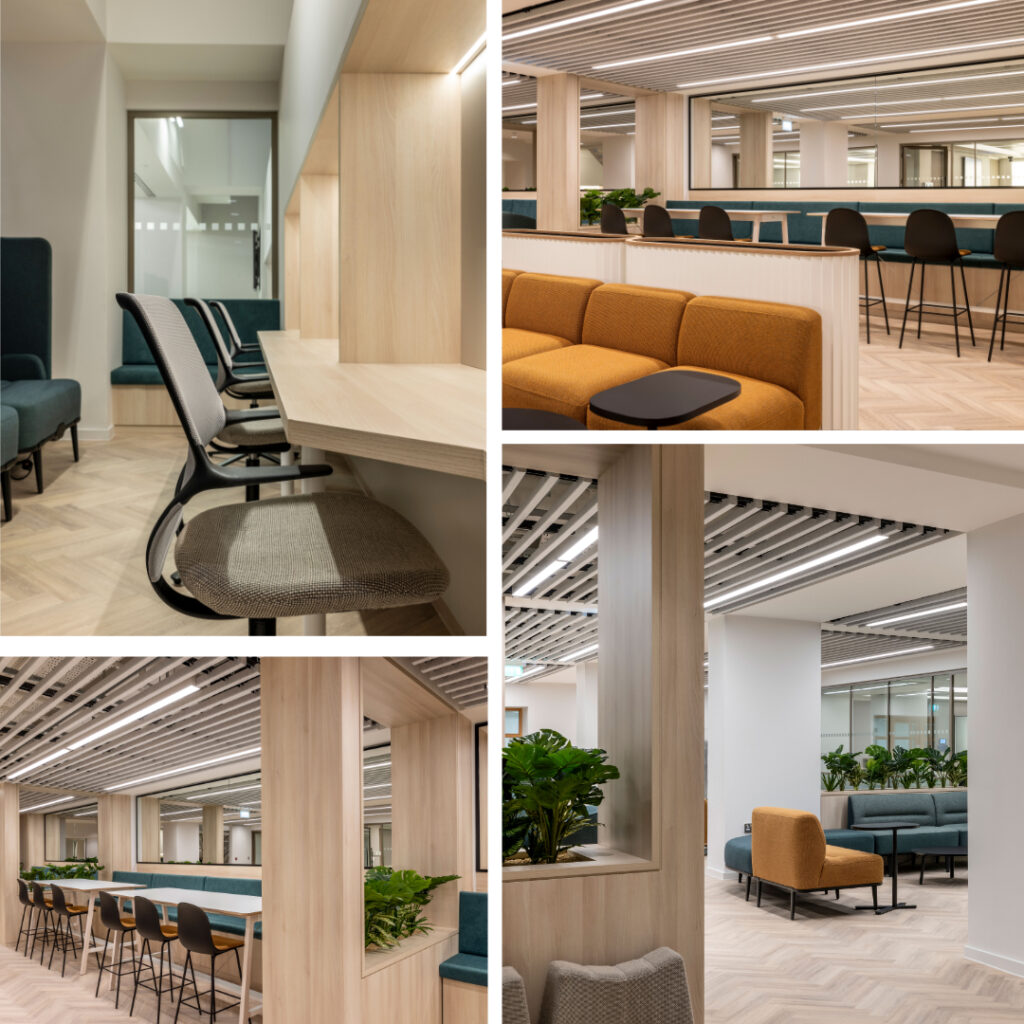
This social study space can be found within the lower basement level of the Little Titchfield Street Campus Building at the University of Westminster. It used to be a library space that didn’t attract users to visit let alone spend time studying. With no natural daylight, redesigning this space was a challenge but we’re pleased to hear this is now one of the favourite teaching/ studying spaces for staff and students.
The layout intentionally promotes engagement and connection. Users are welcomed directly into a central social and study space, creating an
immediate feeling of openness and community at the basement level. Generous glazing between the central study area and the surrounding seminar rooms strengthens visual connection across activities, supporting interaction between different groups and modes of learning.
While open‑plan environments can become visually overwhelming or cluttered, the use of fixed space dividers in this scheme maintains openness while subtly defining zones of activity, and helps keep loose furniture in its intended position. The range of furniture types used, including group soft‑seating, high‑bar collaborative tables, secluded individual study stations and reading booths, offers users choice and autonomy, enabling them to select settings that best support their work style. This variety was intended to foster inclusive and community‑centred learning, and the benefits of learning from each other, within a shared space.
#university #london #westminster #study #learning #highereducation #interiordesign #furniture #collaboration #workspace #educationarchitecture